A Makeup Bag Reset for a Change of Season
A makeup bag reset for a change of season helps you keep what suits your routine and coming weather, set aside what does not, and skip needless replacements.
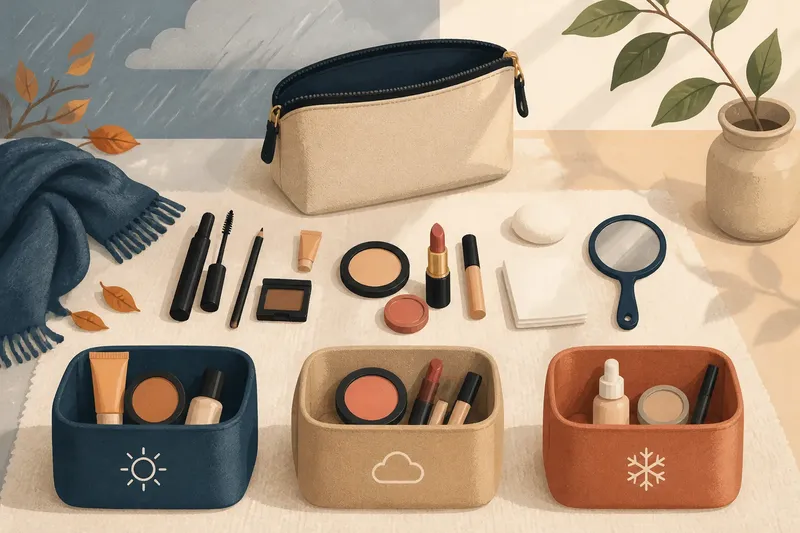
When the mornings turn damp or the afternoon light lingers, a makeup bag reset for a change of season can start with one simple question: what do you actually reach for? Tip the contents onto a clean towel and sort them by use, not by trend. The aim is to make the bag fit the days ahead, not to replace everything that belonged to the last season.
What does your bag need to do now?
Start with the next few weeks as you expect to live them. A walk to work, a heated office, a windy school run and an evening out call for different combinations. You do not need to predict every kind of weather. Just notice the settings that shape most of your days.
Make three loose groups: daily favourites, occasional choices and items you have not touched for a while. Keep the first group nearby. Leave the second visible while you decide whether it has a real place in the coming season. Put the third aside for a closer look rather than discarding it on the spot.
Reach is useful evidence, but it is not the only one. A product may be neglected because it is awkward to use, stored out of sight or suited to a different setting. Ask what job it does, what conditions it suits and whether you have another item doing that job more comfortably.
If an item has no clear role in your likely routine, it does not need to stay in the everyday bag.
Which seasonal situation sounds like yours?
If your days are mostly indoors, what should stay close?
For office days, classes or other indoor routines, keep the products that are quick to apply and comfortable under steady indoor conditions. A familiar base, brow product, mascara or lip colour may be enough, depending on what you wear. If you rarely touch up, there is little reason to carry several versions of the same finish.
Keep a compact mirror or a small brush only if you use it. A bag that closes easily and lets you find a pencil without rummaging can be more helpful than a larger collection.
If you spend time outside, what deserves a place?
Wind, damp air, bright sun and temperature changes can affect how makeup feels and wears. Choose the products you already know sit comfortably through the conditions you meet. If you use a complexion product with sun protection, follow its label for application and reapplication; do not treat makeup as a substitute for other sun-protection measures you rely on.
A tissue, a clean sponge or a small mirror may earn its space if it helps you manage a specific annoyance. Avoid adding tools just because they seem seasonally appropriate. Carry what you can use neatly and safely while out.
If your routine is changing, what can wait?
A new commute, a shift in working hours or more time at home can make last season’s habits less relevant. Keep a small core of products you use often, then store occasional colours or finishes separately. That way, a change in routine does not force an immediate decision about every item.
Say you have started cycling to work and now arrive with a flushed face, while the full-coverage base you carried before stays untouched. You could set that base aside, keep a familiar concealer and brow pencil in the daily bag, and check after a few weeks whether the lighter edit serves the new routine. The observable result is a bag with fewer unused products, not a promise that one formula will suit every ride.
If you enjoy changing your look, how much variety is useful?
Keep variety that gives you a genuine choice: perhaps a neutral eye pencil for daytime and a brighter shade for plans after work. If several items create nearly the same effect, select the one you enjoy using most and store the others together. You can bring them back when the occasion calls for them.
For a special event or a short trip, build a separate small set rather than letting every occasional product live in your everyday bag. That keeps the daily edit calm while leaving room for play.
How should weather shape the edit?
Seasonal changes are not a command to switch formulas. They are a prompt to notice comfort and practicality. A powder that felt easy in humid weather may feel tight in a dry room; a creamy product may feel less appealing if it shifts in warmth. Those are reasons to observe and adjust, not rules that apply to everyone.
For each product you are unsure about, ask:
- Does it feel comfortable in the conditions I expect?
- Can I apply or tidy it without an inconvenient amount of time or equipment?
- Does it still give the finish or effect I want?
- Do I have another product that does the same job better for this routine?
If the answer is unclear, leave the product out of the everyday bag for now rather than forcing a verdict. Keep it somewhere clean and easy to find, then revisit it after you have experienced the new conditions.
For products with special storage, use-by or application directions, follow the label and manufacturer’s instructions. If a product’s condition or your reaction to it concerns you, stop using it and seek appropriate professional advice.
What can you set aside without replacing?
Setting aside is different from throwing away. A product can leave the daily bag because it suits a different occasion, a different weather pattern or a routine you no longer have. Put those items in a clean, dry place, away from heat and direct sunlight, and keep them easy to distinguish from the products you use now.
Do not buy a replacement simply because an old product is no longer convenient. First see whether the remaining items cover the jobs you care about. A concealer may do enough for the occasions when you want a little coverage; a lip colour you already own may bring the desired finish without adding another item. The right answer depends on your preferences, not on making every category look complete.
Discard products that are past their labelled period of use, have changed in smell, texture or appearance, or may have been contaminated. Do not share eye products, and avoid trying to rescue a product whose safety is uncertain. If you are unsure, leave it out rather than putting it back into use.
How do you decide what belongs in the everyday bag?
Use a small set of decisions, not a shopping list. For each item, choose one of three outcomes: keep in the daily bag, store for occasional use, or discard. Ask these questions in order:
- Have I used it recently? If yes, consider keeping it close. If not, ask whether a coming occasion gives it a clear role.
- Does it suit the conditions I expect? Think about comfort, wear and ease of application rather than a seasonal label on the packaging.
- Does it do a distinct job? If another product already covers that need, keep the one that feels easier or more enjoyable to use.
- Is it in suitable condition? Check the product’s appearance and use guidance before keeping it in rotation.
- Will I want it within reach? If it is only for occasional use, store it outside the everyday bag instead.
Imagine you are moving from a dry, heated commute to a rainier walk. You keep the mascara and brow pencil you reach for, move a powder that feels uncomfortable into the occasional drawer, and leave a cream colour at home until you know whether you like wearing it in the damp. The decision is reversible, and the bag reflects what you know rather than what you think you ought to buy.
Keep the everyday edit modest enough that you can see each item at a glance. A small pouch for products used together can help, but there is no need to organise by elaborate categories if you can find things easily.
When should you revisit the reset?
Give the new arrangement time to meet ordinary days. If you repeatedly reach for something stored elsewhere, bring it back. If an item stays untouched, it may be better in the occasional set. The point is not to complete a perfect seasonal overhaul; it is to let actual use guide small changes.
A makeup bag reset for a change of season works best when it leaves room for uncertainty. Keep what you enjoy and what fits the days ahead, set aside what belongs to another moment, and wait before shopping. As the weather settles into its new pattern, your own habits will tell you whether the edit needs one more adjustment.